The Mary Celeste, found adrift in the Atlantic Ocean on December 4, 1872, remains one of the most baffling maritime mysteries in history. The British ship Dei Gratia discovered the vessel, sparking a tale that has captivated people for generations.
The story of the abandoned ship has led to numerous theories and speculations about the fate of its crew. Was it a pirate attack, a mutiny, or something more natural like a storm? The mystery surrounding the Mary Celeste continues to intrigue historians and enthusiasts alike.

The circumstances surrounding the abandonment of the Mary Celeste have become a legendary tale, symbolizing the sea’s power and unpredictability. This article explores the history of the ship, its final voyage, and the enduring mystery that surrounds it.
Key Takeaways
- The Mary Celeste was discovered adrift by the British ship Dei Gratia.
- The ship’s abandonment remains one of history’s greatest maritime mysteries.
- Various theories have emerged regarding the fate of the crew.
- The story continues to captivate historians and the public.
- The Mary Celeste’s legend symbolizes the sea’s unpredictability.
The Mysterious Discovery at Sea
On December 4, 1872, the Dei Gratia stumbled upon an extraordinary maritime mystery when it encountered the Mary Celeste adrift in the Atlantic. This chance encounter would lead to one of the most baffling stories in maritime history.
The Dei Gratia’s Unexpected Encounter
The crew of the Dei Gratia, a British ship, was astonished to find the Mary Celeste abandoned, with no signs of foul play or natural disaster. The circumstances surrounding the discovery were as perplexing as they were intriguing.
First Impressions of the Abandoned Vessel
Upon initial inspection, the crew of the Dei Gratia observed that the Mary Celeste was in good condition, with no visible damage or leaks. The absence of any distress signals or indications of what might have caused the crew to leave the ship added to the enigma.
Initial Boarding and Investigation
As the crew of the Dei Gratia boarded the Mary Celeste, they conducted a thorough investigation, documenting their findings. The table below summarizes their key observations:
| Category | Observation |
|---|---|
| Ship Condition | No damage or leaks observed |
| Personal Belongings | Crew’s personal items still on board |
| Cargo | No signs of theft or damage |
The mysterious circumstances surrounding the Mary Celeste‘s abandonment continued to puzzle the crew of the Dei Gratia. The lack of any clear explanation for the crew’s disappearance only added to the mystique of the maritime mystery.
The Mary Celeste: History and Reputation
Originally constructed in 1861, the Mary Celeste began its life as a sturdy vessel named the Amazon. The ship’s construction was typical for its time, with a wooden hull designed for durability and cargo capacity.
Construction and Launch as the Amazon
The Amazon was built in Nova Scotia, Canada, and was initially used for cargo voyages across the Atlantic. Its early years were marked by average performance, but it soon became embroiled in a series of unfortunate events.
Early Misfortunes and Name Change
The Amazon experienced several mishaps, including collisions and changes in ownership. In 1868, after a significant incident, the ship was renamed Mary Celeste. This change was seen as a way to shake off the bad luck associated with its original name. The Mary Celeste’s history from this point on was still marred by occasional misfortunes, but it managed to maintain a relatively stable operational record.
Acquisition by Captain Briggs
In 1872, Captain Benjamin Briggs acquired the Mary Celeste. Briggs was an experienced captain with a good reputation. He had previously commanded other ships and was known for his cautious and meticulous approach to navigation. Under his command, the Mary Celeste was set for its fateful final voyage.
The Final Voyage Preparations
Captain Benjamin Briggs and his crew were busy with the final preparations for the Mary Celeste’s ill-fated voyage across the Atlantic. The ship was set to depart from New York Harbor on November 7, 1872, bound for Genoa, Italy.
Captain Benjamin Briggs and His Family
Captain Briggs was accompanied by his wife, Sarah, and their two-year-old daughter, Sophia Matilda. The presence of women and a child on board was not unusual, but it added a personal dimension to the voyage.
The Crew Members and Their Backgrounds
The crew of the Mary Celeste consisted of experienced sailors from various backgrounds. They were seasoned mariners, having sailed on numerous vessels before joining the Mary Celeste.
Cargo Details and Intended Route
The Mary Celeste was carrying a cargo of 1,700 barrels of coal, valued at $70,000. The intended route took them across the Atlantic to Genoa, a major port city in Italy.
| Voyage Details | Information |
|---|---|
| Departure Port | New York Harbor |
| Destination | Genoa, Italy |
| Cargo | 1,700 barrels of coal |
| Crew | Experienced sailors from various backgrounds |
The Last Known Movements
As the Mary Celeste sailed out of New York Harbor on November 7, 1872, little did its crew know what lay ahead. The ship, under the command of Captain Benjamin Briggs, was beginning its voyage to Genoa, Italy.
Departure from New York Harbor
The Mary Celeste departed from New York Harbor with a crew of experienced sailors and a cargo of coal. The departure marked the beginning of a journey that would become infamous due to the mysterious events that followed.
Captain’s Log Entries
Captain Briggs maintained a detailed log during the voyage. The last entry in the captain’s log was on November 25, 1872, indicating that the crew was handling the rough weather conditions in the Atlantic.
Weather Conditions in the Atlantic
The North Atlantic Ocean was experiencing severe weather during November 1872. Storms and rough seas were common, posing significant challenges to ships navigating through the area. The Mary Celeste was not immune to these conditions, as evidenced by the captain’s log entries.
The combination of the captain’s log entries and the known weather conditions provides valuable insights into the Mary Celeste’s final days at sea. Despite the challenges posed by the weather, there were no indications of any extraordinary events on board until the ship was found abandoned.
The Abandoned Ship’s Condition
The Mary Celeste, found abandoned in the Atlantic, presented a baffling scene to its discoverers. On boarding, the crew of the Dei Gratia found a ship that was seemingly well-maintained but eerily deserted.
Personal Belongings Left Behind
Personal belongings of the crew, including valuables, were still on board, suggesting that the crew had left in a hurry. The crew’s personal effects, such as clothing and keepsakes, were found in their quarters, indicating no signs of a struggle or panic.
State of the Cargo and Supplies
The cargo was found to be intact, with no signs of damage or pilferage. The ship’s supplies, including food and water, were still on board, and there was no indication of any shortage that might have prompted the crew to abandon ship.
Peculiar Details That Puzzled Investigators
Several peculiar details were noted by the investigators. The captain’s log was disarrayed, and a valuable navigational tool was missing. Most intriguingly, the ship’s lifeboat was gone, suggesting that the crew had taken it when they left.
| Condition | Observation |
|---|---|
| Personal Belongings | Left behind, including valuables |
| Cargo and Supplies | Intact, no signs of damage or shortage |
| Navigational Equipment | Some equipment missing, log disarrayed |
As captain David Morehouse of the Dei Gratia noted, “It was as if they had vanished into thin air.” This sentiment was echoed by many who later investigated the mystery of the Mary Celeste.
“The Mary Celeste was found in good condition, with no signs of damage or struggle, but with all personal belongings left behind.”
The Salvage Hearing in Gibraltar
A thorough investigation into the Mary Celeste’s abandonment was conducted during the salvage hearing in Gibraltar, a process that would unravel the complexities surrounding the mysterious event.
Legal Proceedings and Testimonies
The salvage hearing involved testimonies from the crew of the Dei Gratia, who had discovered the Mary Celeste adrift. Their accounts provided crucial insights into the condition of the abandoned ship and its cargo.
Legal proceedings were rigorous, with the court scrutinizing every detail to determine the circumstances that led to the Mary Celeste being abandoned.
Frederick Solly Flood’s Investigation
Frederick Solly Flood, the attorney general of Gibraltar, led the investigation with a keen eye for detail. His inquiries focused on uncovering evidence that could explain the mysterious abandonment of the Mary Celeste.
Controversies and Accusations
The hearing was not without controversy, as accusations were raised regarding the potential involvement of the Dei Gratia’s crew in the Mary Celeste’s abandonment. These allegations added a layer of complexity to the investigation.

Major Theories: Natural Explanations
Among the various theories attempting to explain the Mary Celeste’s mysterious abandonment, natural explanations stand out as particularly compelling. These theories offer a range of possible reasons for the crew’s disappearance, focusing on events that could have led to the ship being left adrift without human intervention.
The Alcohol Vapor Hypothesis
One of the most popular natural explanations is the alcohol vapor hypothesis. This theory suggests that fumes from the cargo of industrial alcohol could have caused the crew to become disoriented or even flee the ship in panic. Experiments have shown that under certain conditions, alcohol vapor can accumulate in dangerous quantities, potentially leading to explosions or hazardous atmospheres.
Severe Weather Phenomena
Severe weather is another natural explanation that has been proposed. The North Atlantic, where the Mary Celeste was found, is known for its unpredictable and sometimes violent weather patterns. A sudden storm could have caused the crew to abandon ship, although there was no evidence of damage consistent with such an event.
Seaquake and Waterspout Possibilities
Some researchers have suggested that a seaquake or waterspout could have been responsible for the abandonment. These rare marine events can be catastrophic, potentially causing a ship to be abandoned if the crew believed it was in imminent danger. A waterspout, in particular, could have been mistaken for a more significant threat, prompting the crew to leave in haste.
Structural Failure Considerations
Structural failure is another aspect to consider. Although the ship was found to be in relatively good condition, there could have been underlying issues that were not immediately apparent. A hidden structural problem could have led the crew to abandon ship if they believed it was on the verge of a catastrophic failure.
| Theory | Description | Evidence |
|---|---|---|
| Alcohol Vapor Hypothesis | Fumes from industrial alcohol cargo caused disorientation | Experiments showing potential for dangerous vapor accumulation |
| Severe Weather | Sudden storm led to abandonment | No damage consistent with severe weather found |
| Seaquake/Waterspout | Rare marine event caused abandonment | No direct evidence, but possible misinterpretation by crew |
Alternative Theories: Human Factors
As investigations into the Mary Celeste’s fate continued, theories involving human error or malice gained traction. One of the most enduring aspects of the mystery surrounds the potential involvement of human factors.
Mutiny and Violence Scenarios
Some theories suggest that a mutiny might have taken place on board, potentially resulting in violence. The absence of signs of struggle or evidence of foul play, however, complicates this narrative. Mutiny typically involves a conflict between crew members and the commanding officers, but the Mary Celeste showed no clear signs of such an event.
Piracy and Deliberate Abandonment
Piracy is another human factor that has been considered. The idea that the crew might have been driven off or taken by pirates has been debated. However, there’s no concrete evidence to support this claim, as the ship’s cargo and personal belongings were left intact.
Insurance Fraud Allegations
Some speculate that the abandonment of the Mary Celeste was a case of insurance fraud. The theory posits that Captain Briggs or other stakeholders might have orchestrated the abandonment to claim insurance money. While intriguing, this theory lacks substantial evidence to back it up.
Psychological Panic and Poor Decision-Making
Psychological factors could have played a role in the crew’s decision to abandon ship. The stress of navigating through treacherous waters, coupled with potential misinterpretation of natural phenomena, might have led to panic. This theory suggests that the crew’s decision to abandon ship was a result of poor judgment rather than malice.
The Mary Celeste’s case continues to fascinate, with human factors offering a complex and intriguing layer to the mystery. While these theories are compelling, they remain speculative, leaving the true cause of the abandonment unresolved.
The Fate of the Ship After Discovery
Following its salvage, the Mary Celeste sailed on, changing hands multiple times before meeting its eventual demise. The ship was sold to new owners, who continued to operate it for several years.
Subsequent Owners and Voyages
The Mary Celeste was renamed several times and sailed under different captains. It continued to be used for cargo transport, traversing various routes across the globe. The ship’s durability and seaworthiness were testament to its original construction as the Amazon.
Final Years and Deliberate Wrecking
In its final years, the Mary Celeste was involved in various maritime activities until it was deliberately wrecked off the coast of Haiti in 1885. This act was likely due to the ship’s deteriorating condition or as a result of insurance fraud, a common practice at the time.
Archaeological Efforts to Locate the Wreckage
In recent years, there have been efforts to locate the wreckage of the Mary Celeste. Researchers have employed advanced technologies to trace the ship’s final resting place. As noted by a maritime historian, “The search for the Mary Celeste’s wreck is not just about finding a ship; it’s about uncovering a piece of maritime history.”

The search continues, driven by the intrigue surrounding the Mary Celeste’s history and its enduring legacy in maritime lore.
The Mary Celeste in Popular Culture
The enigmatic story of the Mary Celeste has transcended its historical context, embedding itself in the fabric of popular culture. This phenomenon is largely attributed to the ship’s mystifying abandonment, which has captivated artists, writers, and filmmakers for generations.
Arthur Conan Doyle’s “J. Habakuk Jephson’s Statement”
One of the most notable literary works inspired by the Mary Celeste is Arthur Conan Doyle’s short story, “J. Habakuk Jephson’s Statement.” Published in 1884, this tale wove a fictional narrative around the real-life mystery of the Mary Celeste, further cementing its place in the public imagination.
Film and Television Depictions
The Mary Celeste has also been featured in various films and television shows, often as a plot device to evoke mystery or supernatural elements. These depictions have contributed to the ship’s enduring presence in popular culture, introducing its story to new audiences.
Impact on Maritime Folklore
The Mary Celeste’s influence extends into maritime folklore, where it is often cited as an example of the sea’s unpredictable and sometimes inexplicable nature. The ship’s legend has been perpetuated through oral traditions and written accounts, solidifying its status as a maritime enigma.
| Media Form | Notable Examples |
|---|---|
| Literature | Arthur Conan Doyle’s “J. Habakuk Jephson’s Statement” |
| Film and Television | Documentaries, drama series, and mystery films |
| Maritime Folklore | Oral traditions and written maritime histories |
Similar Maritime Mysteries Throughout History
Maritime history is replete with enigmatic stories, and the Mary Celeste is just one of many vessels that have been found abandoned or under mysterious circumstances. The phenomenon of ghost ships has fascinated the public for centuries, with numerous incidents reported across the globe.
The HMS Resolute
The HMS Resolute was a British Arctic exploration ship that was abandoned in 1854. It was later found adrift by an American whaling ship and returned to the United States. The ship was eventually restored and presented to Queen Victoria as a symbol of goodwill.
The Carroll A. Deering
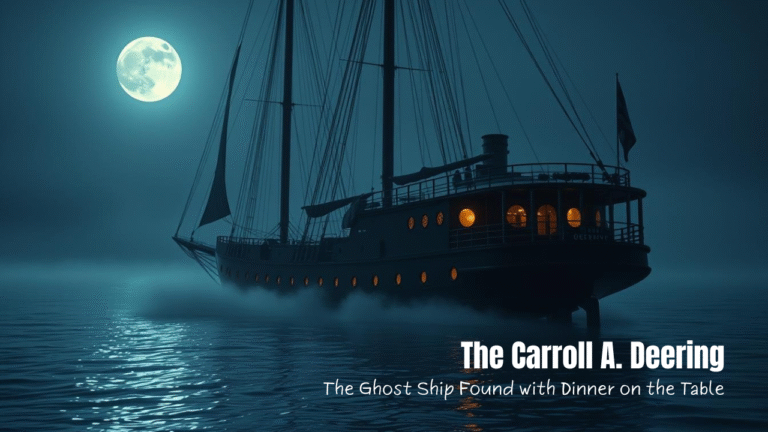
The Carroll A. Deering was a merchant ship found abandoned off the coast of North Carolina in 1921. The crew’s personal belongings, including valuables, were still on board, sparking speculation about the crew’s fate.
The Baychimo
The Baychimo was a trading ship that became trapped in ice off the coast of Alaska in 1931. The crew abandoned ship, but the vessel remained afloat and was spotted numerous times over the years, becoming known as a “ghost ship.”
Modern Ghost Ship Incidents
In recent years, there have been several incidents of ghost ships being discovered. For example, in 2014, a North Korean cargo ship was found adrift off the coast of Japan, sparking an international incident.
| Vessel | Year Abandoned | Circumstances |
|---|---|---|
| HMS Resolute | 1854 | Abandoned in Arctic ice |
| Carroll A. Deering | 1921 | Found off North Carolina coast |
| Baychimo | 1931 | Trapped in Alaskan ice |
These maritime mysteries continue to captivate the public’s imagination, raising questions about the circumstances surrounding the abandonment of these vessels.
Conclusion
The Mary Celeste mystery continues to captivate the imagination of people around the world. Despite numerous investigations and theories, the circumstances surrounding the abandonment of the ship remain a topic of speculation and debate.
The legend of the Mary Celeste has endured for over a century, inspiring further research and exploration into this maritime enigma. As we reflect on the history and the various theories surrounding the Mary Celeste, it becomes clear that the mystery is as intriguing today as it was when the ship was first discovered adrift in 1872.
The Mary Celeste mystery serves as a reminder of the sea’s power and unpredictability, leaving us with a conclusion that is both fascinating and unsettling. As new evidence and theories emerge, the story of the Mary Celeste will continue to unfold, captivating audiences and inspiring new generations to explore the depths of this enduring maritime mystery.
FAQ
What was the Mary Celeste?
The Mary Celeste was a merchant ship that was found adrift in the Atlantic Ocean in December 1872, with no signs of its crew on board.
Who discovered the Mary Celeste?
The Mary Celeste was discovered by the British ship Dei Gratia on December 4, 1872.
What was the condition of the Mary Celeste when it was found?
The ship was found to be in good condition, with no signs of damage or leaks, and its cargo was still intact.
What happened to the crew of the Mary Celeste?
The fate of the crew remains a mystery, with various theories having been proposed, including mutiny, piracy, and natural disasters.
Who was Captain Benjamin Briggs?
Captain Benjamin Briggs was an experienced captain who commanded the Mary Celeste on its final voyage, accompanied by his wife and young daughter.
What was the cargo of the Mary Celeste?
The Mary Celeste was carrying a cargo of coal from New York to Genoa.
What were the weather conditions like during the Mary Celeste’s final voyage?
The weather in the Atlantic during that period was rough, with storms reported in the area.
What is the alcohol vapor hypothesis?
The alcohol vapor hypothesis is a theory that suggests that the crew of the Mary Celeste may have abandoned ship due to a mistaken belief that the cargo of coal was on fire or that the ship was in danger of exploding due to the release of flammable vapors.
Has the wreckage of the Mary Celeste been found?
Efforts to locate the wreckage of the Mary Celeste have been ongoing, with some success in recent years, although the exact location remains uncertain.
What is the significance of the Mary Celeste in maritime history?
The Mary Celeste is considered one of the most enduring unsolved maritime mysteries in history, captivating people for generations and inspiring numerous theories and speculations.
What are some other maritime mysteries similar to the Mary Celeste?
Other maritime mysteries include the HMS Resolute, the Carroll A. Deering, and the Baychimo, among others.